
Virtual Assistant for CPA
Focus on core functions with a virtual assistant for CPAVirtual Assistant for CPA
From navigating tax season to keeping up with regulatory changes, the life of an accountant isn’t short of complex tasks. And for solo practitioners and smaller firms, it can be challenging to juggle growing responsibilities while meeting the industry’s strict demands.
Aside from these complex accounting tasks, certified public accountants (CPAs) also need to spend time on back-end and administrative work to keep business operations running smoothly. Taking on these types of tasks can spread any professional too thin. Fortunately, a virtual assistant for a CPA can handle back-office tasks, freeing up time for core accounting work.
Let’s get to know what a virtual assistant is and how they can help CPAs improve their practice without overshooting costs, losing work-life balance, or sacrificing quality of work.
What is a Virtual Assistant for CPA?
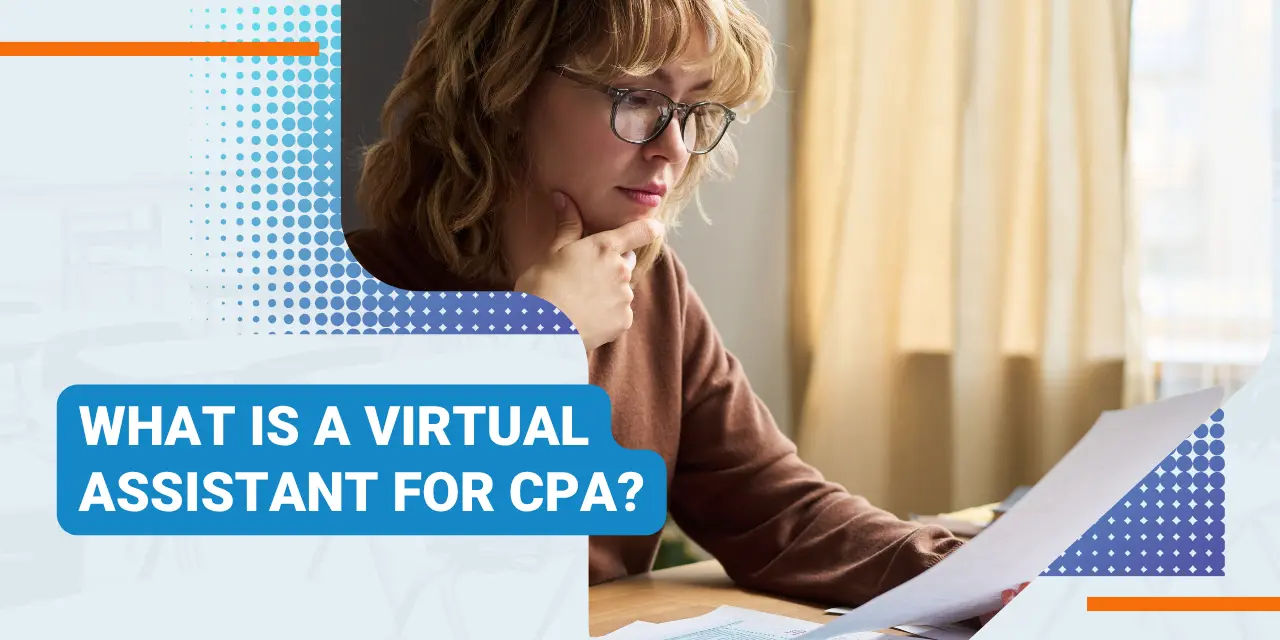
A virtual assistant (VA) for CPAs is a remote professional who specializes in supporting certified public accountants with administrative and back-office tasks. Beyond the routine tasks that general VAs can handle, a CPA-focused VA also offers support with accounting-related tasks. Their understanding of financial data, compliance standards, and accounting tools enables them to be a great addition to a CPA and accounting firm.
Benefits of Hiring a Virtual Assistant for CPAs
The advantages of hiring a virtual assistant extend far beyond saving time. For CPAs, the impact is felt across the board. With the right support, firms can reduce staff burnout, strengthen client relationships, and maintain flexibility, especially during peak periods like March to April and September to October.
Increased Focus on High-Value Work
Offloading routine but time-consuming tasks like routing documents, filling out forms, and managing emails can free 10-15 hours per week. That’s time that can be redirected to strategic planning, financial management tasks, and advisory services that directly contribute to revenue.
By shifting focus away from administrative work, CPAs can deliver deeper insights, provide more personalized client support, and strengthen their role as trusted financial advisors. Over time, this shift in focus can lead to stronger client relationships, increased profitability, and more opportunities for long-term growth.
Reduced Workload and Burnout
Accountants often face long hours and complex tasks, particularly during tax season and audits. By working with a skilled virtual assistant, they can ease the burden and manage their workload better. By taking on clerical and back-end tasks, virtual assistants enable CPAs to provide high-quality work without becoming overwhelmed.
Improved Client Relationships
Managing customer relationships is an important part of any service-sector business. By providing timely and helpful responses, you can create better client experiences, stronger trust, and increased client retention.
However, handling follow-ups, scheduling appointments, and responding to routine inquiries can be difficult to tackle when you’re already bogged down by your core responsibilities. That’s where a VA can come in. They can handle client support tasks, so you don’t have to worry about having to add more to-dos to your already loaded plate.
Flexibility During Peak Seasons
One of the biggest advantages of virtual assistant staffing is scalability. You can increase support during busy months and scale back during slower periods. You can maintain the right level of capacity throughout the seasons without the long-term commitment of hiring full-time staff.
Additionally, VA staffing enables you to meet fluctuating demands cost-effectively. The average hourly wage of a US-based administrative staff is $22.82/hr compared to the hourly rate of a 20four7VA administrative assistant, which starts at $5.00/hr. This significant cost difference allows CPA firms to access reliable support while keeping operational expenses under control.
Access to global, specialized talent
Hiring a virtual assistant gives businesses access to a global pool of professionals with specialized skills tailored to the accounting industry. This means they can find VAs who are already familiar with standard accounting processes, compliance requirements, and the tools commonly used by CPAs and accounting firms.
Working with someone who understands the accounting sector, including its processes and common tools used, is an advantage. It reduces training time and allows for a smoother integration into existing teams. As a result, your virtual assistant can provide meaningful support from day one, helping clients maintain accuracy and consistency in their operations.
What Can a Virtual Assistant for Accountants Do?
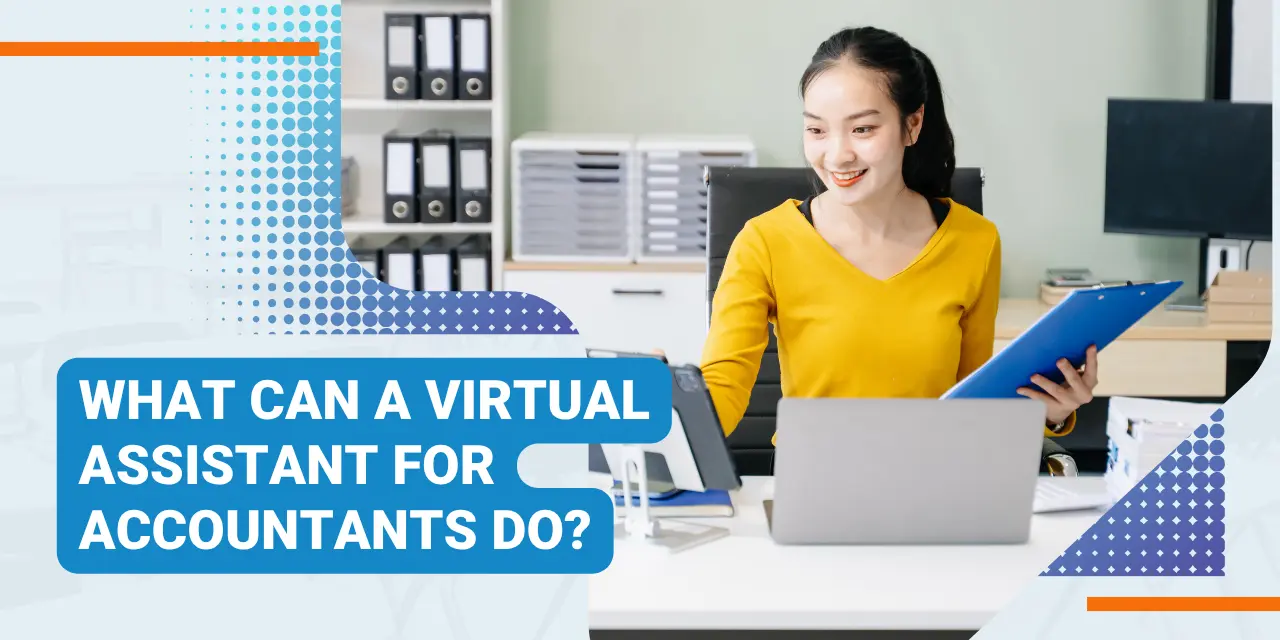
An accountant VA’s duties may vary by business size and niche, but most tasks of CPA-focused VAs fall into four main task categories.
Administrative & Client Communication Support
- Email management (categorization, drafting replies, flagging urgent emails, etc.)
- Responding to FAQs or routine inquiries
- Handling intake forms
- Data entry and database management
- Appointment scheduling using Google Calendar, Calendly, or Outlook
- Sending follow-ups to clients for requirements or missing tax documents
- Preparing engagement letters and e-signature packets
- Voicemail management and routing phone calls to appropriate team members
Accounting Support
- Recording daily or weekly transactions in QuickBooks Online, Xero, or Sage
- Performing monthly reconciliations and flagging discrepancies
- Maintaining AR/AP aging reports
- Preparing invoices and sending statement reminders
- Expense tracking and receipt organization in cloud storage
- Document organization for financial reporting packages
- Updating accounting software
Tax Season & Compliance Support
- Organizing client files for tax filing in cloud storage with consistent naming conventions
- Creating checklists for requirements
- Document preparation
- Monitoring deadlines and sending reminders
Practice Management & Marketing Support
- Updating CRM records
- Transcribing meetings
- Assisting with simple social media updates, LinkedIn posting, and more
- Preparing basic management reports (WIP reports, productivity summaries) from existing data
- Tracking performance metrics
- Maintaining training materials and SOPs for the continuous improvement of firm processes
A virtual assistant for accountants can support a wide variety of tasks. The key is identifying specific bottlenecks where remote support can create the most impact. However, more complex or regulated tasks should remain under CPA supervision to ensure compliance while still benefiting from additional support.
What to Look for in a Virtual Assistant for Accountants
Not every VA is suited for handling sensitive client information and financial data. CPAs should evaluate both technical familiarity and soft skills when hiring a virtual assistant for their firms.
Accounting & Tax Literacy
A virtual assistant with prior exposure to bookkeeping or working with CPAs and accounting firms means they can speak “the same language” as their CPA clients. They have a common understanding of industry-specific terminology and workflows. This familiarity allows them to effectively communicate within the team and integrate into established processes.
They are typically well-versed in core accounting concepts such as debits and credits, trial balances, profit and loss statements, and balance sheets. Additionally, they can navigate widely used platforms like QuickBooks and Xero, further enabling faster onboarding and immediate contribution.
Attention to Detail & Accuracy
Accounting roles require keen attention to detail to ensure accuracy. Small mistakes can lead to significant financial discrepancies, compliance issues, and loss of client trust. A virtual assistant for a CPA must demonstrate meticulousness in every task they perform.
An accounting VA needs to be meticulous and appreciate the importance of accuracy in this field. They need to follow naming conventions, checklists, and standard operating procedures without skipping steps. To gauge a candidate’s precision, they can accomplish sample tasks, such as reconciling a small bank statement or entering invoice batches during the screening and recruitment process.
Confidentiality & Data Security Awareness
CPAs require virtual assistants who have a strong understanding of data security protocols and confidentiality standards. Given the sensitive nature of the financial information and personal documents they encounter, it is essential that VAs are strongly committed to protecting client data and practicing strict discretion at all times.
It’s also important for VAs to be familiar with best cybersecurity practices such as 2FA, password managers, and secure file transfer tools. Additionally, CPAs can ask their virtual assistants to sign NDAs for another layer of security.
Communication Skills
Accounting VAs don’t just need to be good with numbers and details; they also need to communicate well. A good VA for a CPA requires strong written communication skills for drafting emails, completing forms, and documenting processes. They would also need this skill in order to seamlessly collaborate with CPAs and clients through tools like Slack, Microsoft Teams, Zoom, and other systems.
Hire a 20four7VA Virtual Assistant
To find the right virtual assistant for an accounting practice, partnering with a trusted remote staffing company like 20four7VA can make the process more efficient and reliable. Our team streamlines sourcing and matching by providing access to pre-vetted global talent, along with end-to-end support throughout the hiring process.
With our tried-and-tested solutions, we help firms find virtual assistants who align with their operational needs. This level of support not only reduces hiring time but also ensures a smoother integration into existing workflows. By partnering with 20four7VA, businesses can fully realize the benefits of VA staffing without the added burden of managing the process internally.
Schedule your free consultation with 20four7VA today and take the first step toward building reliable support for your CPA practice.
Frequently Asked Questions (FAQs)
What tasks can a virtual assistant for CPAs handle?
A virtual assistant for CPAs can manage a wide range of tasks, including administrative support, client communication, bookkeeping assistance, and tax season preparation. They can also help with document organization, scheduling, data entry, and compliance tracking. By taking on these routine yet time-consuming tasks, VAs enable CPAs to focus on higher-value work.
Is it safe to outsource accounting-related tasks to a virtual assistant?
Yes, it can be safe to outsource tasks to a virtual assistant, provided proper safeguards are in place. First, it’s crucial to work with trusted providers that implement data security protocols and secure tools. It’s also important to have VAs sign confidentiality agreements before they handle sensitive data. Additionally, sensitive or complex tasks should remain under strict CPA supervision to ensure compliance and integrity of data.
How do CPAs know if they need a virtual assistant?
A CPA may benefit from a virtual assistant when administrative tasks begin to take time away from core responsibilities, deadlines become harder to manage, or workload increases during peak seasons. Hiring a VA can help improve efficiency, reduce burnout, and support business growth without the need for full-time staff.